
 EN
EN
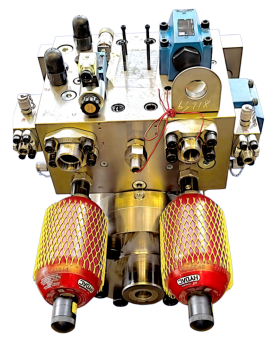
The Evolution of Mold Oscillation in Modern Casting
Major continuous casting plants worldwide keep pushing the limits of casting speed and slab surface quality. With more than ten years of on-site experience troubleshooting hydraulic system faults, I have personally observed that unstable mould oscillation can cause adhesion between molten steel and cooling copper tubes, triggering surface cracks on slabs. Worse still, it may lead to steel leakage, resulting in the rejection of an entire heat of slabs. Conventional mechanical oscillation systems or open-loop hydraulic oscillation units often struggle to stably maintain sinusoidal and non-sinusoidal oscillation waveforms under fluctuating thermal loads. Upgrading to high-performance servo hydraulic systems will fundamentally reverse this situation. Boasting ultra-high responsiveness and adaptive control capabilities, such systems represent core technologies urgently needed by modern steel enterprises to sustain market competitiveness.
High-precision Control Enabled by Closed-loop Feedback
Achieving micron-level precision for mould oscillation is no accident; it relies on an intelligent system architecture and real-time closed-loop feedback. Under an advanced multi-axis configuration, the system continuously acquires position, velocity and force signals. When operating under high-frequency oscillation conditions, the servo hydraulic system instantly corrects minor deviations. This closed-loop control architecture eliminates phase lag, ensures the mould faithfully follows the set displacement curve, minimises friction between slabs and mould copper liners, and markedly improves the quality of continuous cast slabs.
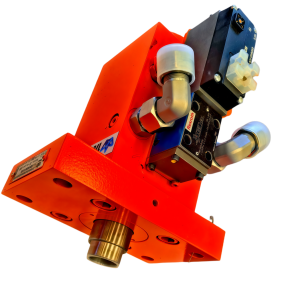
Performance Benchmarking: Conventional Hydraulic Systems vs. Servo-driven Hydraulic Systems
Engineers and steel plant managers attach great importance to quantitative data, which directly reflects the actual operating performance of equipment. Conventional hydraulic systems commonly suffer from thermal drift and substantial energy loss during throttling. In contrast, servo hydraulic systems enable on-demand power optimisation, greatly cutting no-load energy consumption while shortening dynamic response time. Combined with benchmark data from recent field tests, the table below clearly illustrates prominent disparities in operational efficiency and technical parameters between the two types of systems.
Performance Metric |
Traditional Hydraulic System |
Advanced Servo Hydraulic System |
Response Time |
50ms - 100ms |
Less than 10ms |
Displacement Accuracy |
$\pm 0.5\text{ mm}$ |
$\pm 0.02\text{ mm}$ |
Energy Efficiency |
Low (continuous throttling) |
High (variable speed/displacement on demand) |
Maintenance Frequency |
High (oil degradation & valve wear) |
Low (robust closed-loop self-diagnostics) |
System Application Parameter |
Heavy-Duty Standard Station |
Servo-Optimized Casting Station |
Rated System Pressure |
16MPa - 25MPa |
15MPa - 25MPa |
Flow Rate Control |
Fixed or manual adjustment |
Dynamic closed-loop adjustment |
Power Capacity |
15KW - 150KW |
15KW - 150KW (optimized delivery) |
Control Stability |
Moderate under variable loads |
Exceptional under high-frequency load |
Driving Long-Term Value Through Superior Manufacturing
Investing in advanced fluid control technology is essentially a commercial decision aimed at maximising steel mill revenue and reducing unplanned downtime. Inferior hydraulic components can easily trigger severe production line shutdowns, losses unaffordable for steel manufacturers. Cutting-edge engineering design and top-tier manufacturing capabilities converge perfectly in our solutions.
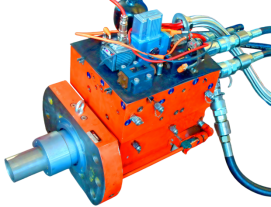
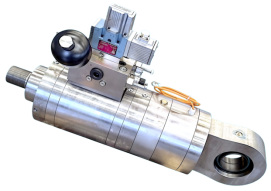
Uranus mould servo oscillation hydraulic cylinders deliver ultra-high precision and rapid dynamic response for modern continuous casting production. Adopting electro-hydraulic direct drive and a fully integrated digital control system, they support real-time intelligent adjustment of oscillation amplitude, frequency and waveform skew without halting production. The mould is guaranteed to oscillate along the negative strip camber trajectory with stringent precision, substantially improving lubrication between slabs and mould walls and effectively preventing sticker breakout.
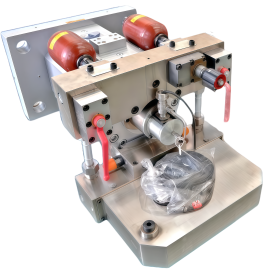
The company’s self-developed 8000T performance test bench can simulate full-load operating conditions to carry out customised oscillation tests. It also provides data logging and waveform analysis reports to guarantee stable and reliable product performance.
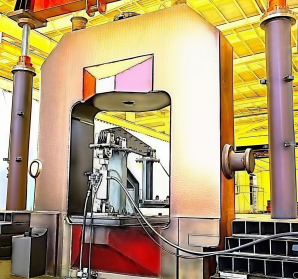
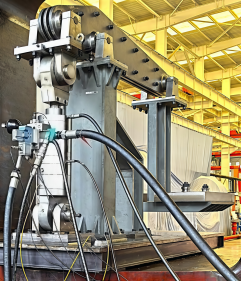
UranusTJ delivers complete supply chain solutions tailored to the stringent operating conditions of steel enterprises worldwide. Leveraging precision machining capabilities and expertise in intelligent servo hydraulic system integration, together with rigorous prototype testing, we support steel mills and manufacturers across the globe in achieving higher yield rates, lower energy consumption and sustained high-quality long-term operation.