
 EN
EN
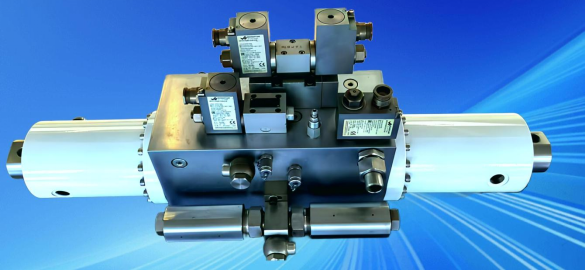
Bi-directional Booster Cylinder
A hydraulic intensifier cylinder is a pressure amplification device based on Pascal’s Law.
The working principle involves a large-diameter hydraulic cylinder generating a strong thrust that drives a smaller plunger into the intensifying chamber to produce high pressure.
The chamber pressure equals the working pressure of the large cylinder multiplied by the ratio of the large piston area to the small plunger area.
Through this mechanism, the intensifier cylinder can amplify ordinary hydraulic system pressure to several hundred MPa. It is widely used in metallurgy, injection molding machines, hydraulic presses, laboratory equipment, synthetic diamond presses, and nuclear reactor pressure vessels, where high pressure precision is required.
Navigating the Complexities of Ultra High Pressure Engineering
Designing equipment capable of enduring extreme pressures requires a fundamental shift in how mechanical stress and fluid dynamics are managed. Operating at thresholds of 60-600MPa demands absolute precision, where even microscopic imperfections in material composition can lead to catastrophic failure. Through years of hands-on deployment in heavy industrial sectors, engineering teams continually encounter the challenge of balancing high load capacity with structural longevity. Field observations reveal that standard hydraulic configurations rapidly degrade under continuous extreme cycling, making rigorous stress distribution analysis and advanced finite element modeling non-negotiable steps in the design phase.
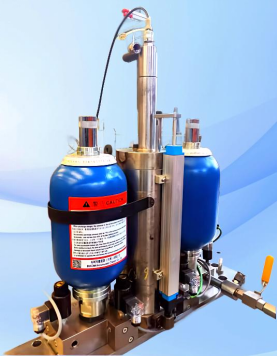
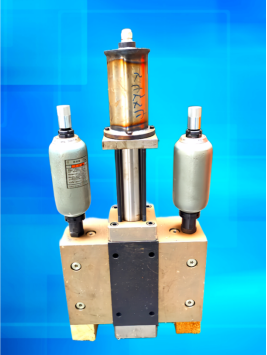
Precision Booster Cylinder High-Frequency Servo Booster Cylinder
Rigorous Testing Protocols and Quality Assurance Standards
To guarantee safety and performance at 60-600MPa, hydraulic cylinders must undergo a punishing series of factory validation checks. Industry standards dictate that prototype units endure cyclic fatigue testing well beyond their rated operating thresholds to simulate years of active field service. In practical applications, pressure testing involves flooding the internal chambers with specialized test media to monitor volumetric expansion and structural yield points. Certified testing facilities employ high-precision sensors to record pressure spikes and transient responses, ensuring every manufactured unit complies strictly with international quality benchmarks before leaving the production floor.
Testing Parameter |
Standard Industrial Requirement(≤480MPa) |
URANUS Enhanced Protocol(≤400MPa) |
Proof Pressure Test |
1.25x Rated Operating Pressure1.25 |
1.5x Rated Pressure with 10-Minute Hold |
Cyclic Fatigue |
100,000 Cycles |
500,000+ Continuous |
Leakage Rate |
Minimal Seepage Allowed |
Zero Tolerance across Dynamic Seals |
Advanced Metallurgy and Sealing Innovations
The secret to maintaining structural integrity under ultra-high pressure lies in the synergy between metallurgy and seal technology. Cylinders operating at these levels typically utilize forged alloy steels subjected to specialized quenching and tempering processes to achieve optimal tensile strength. Furthermore, the dynamic seals must withstand severe frictional heat and extreme fluid velocity without extrusion. Utilizing multi-stage composite seal rings significantly reduces wear rates, effectively preventing fluid bypass and pressure drop during high-frequency operations.
Component Layer |
Material Specification |
Functional Advantage |
Cylinder Barrel |
Forged Alloy Steel (4340/34CrNiMo6) |
Superior Tensile Strength and Fatigue Resistance |
Plunger Rod |
Induction Hardened Chrome-Plated Steel
|
Enhanced Surface Hardness and Corrosion Resistance |
|
Seal Assembly
|
Filled PTFE and Polyurethane Compounds |
Low Friction and High Extrusion Resistance |
Real-World Applications and Energy Optimization
High-pressure hydraulic intensifiers play a pivotal role in demanding environments such as offshore oil extraction, metal forming, and heavy-duty press machinery. Integrating advanced booster systems allows facilities to generate output pressures up to 600 MPa while utilizing lower baseline input pressures, cutting overall energy consumption by up to 50 percent. Field feedback from metallurgy plants indicates that optimizing the displacement ratio between the drive piston and the high-pressure plunger leads to smoother cycle times and drastically reduced thermal accumulation during continuous shifts.
Global Manufacturing Excellence and Tailored Supply Solutions
Delivering robust hydraulic solutions for international markets requires a seamless integration of advanced machining centers, stringent quality control, and an agile supply chain. URANUS leverages state-of-the-art manufacturing infrastructure to produce a comprehensive portfolio of high-pressure cylinders, ranging from standard booster units to customized multi-stage intensifiers tailored for unique industrial workflows. By combining deep engineering expertise with responsive global logistics, URANUS remains a trusted manufacturing partner for over one thousand industrial enterprises seeking reliable, energy-efficient motion control solutions.