
 EN
EN
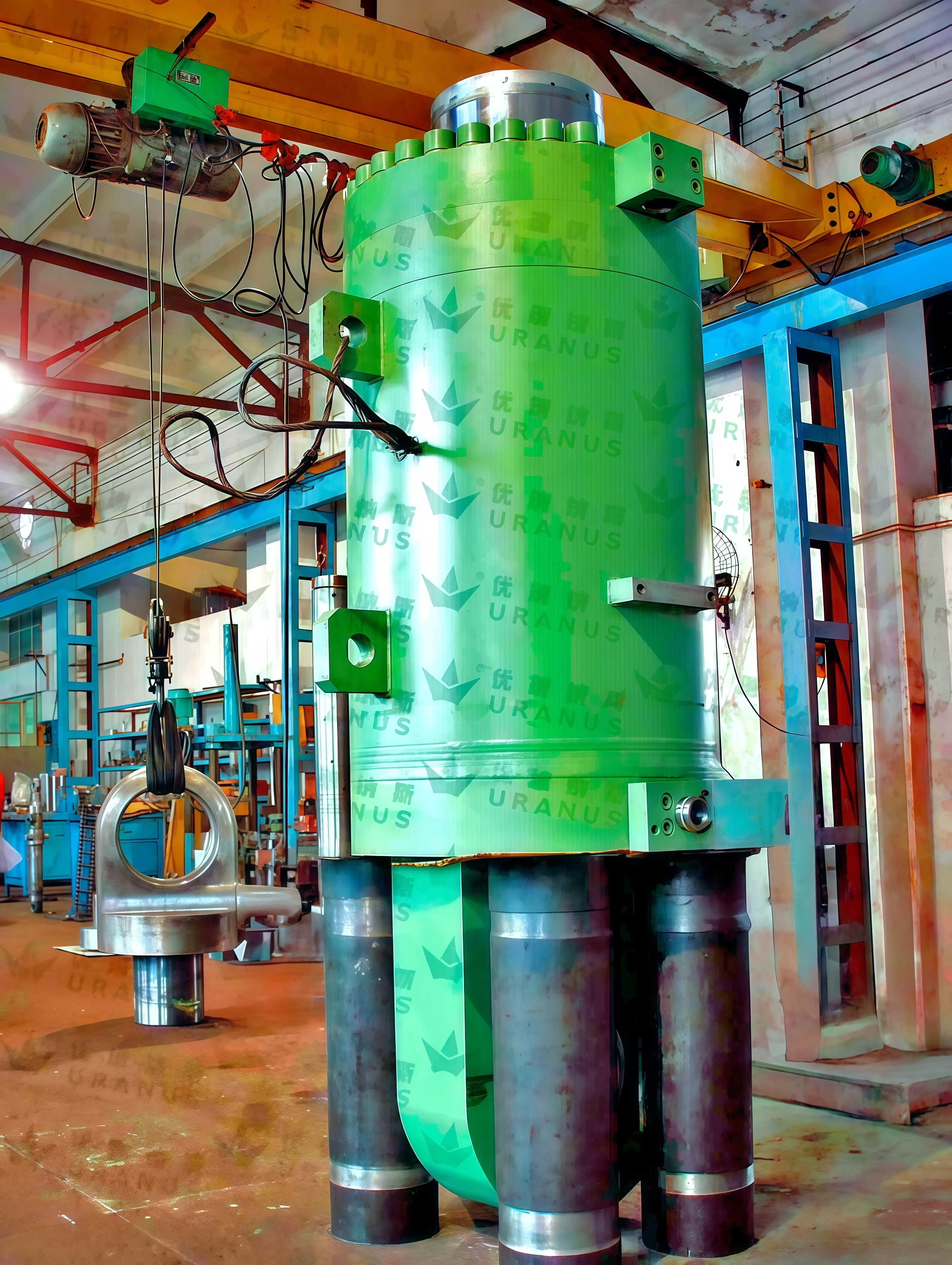
Metallurgical Hydraulic Cylinder Guide: Extreme Durability for Steel Mills and Heavy Manufacturing
Introduction: The Demanding World of Metallurgical Hydraulics
In steel mills and heavy manufacturing, metallurgical hydraulic cylinders face some of the harshest operating conditions in industrial machinery. Extreme temperature swings, abrasive particulates, and sudden shock loads rapidly degrade standard cylinders—leading to unplanned downtime, costly repairs, and production losses.
The metallurgical hydraulic cylinder is engineered specifically for these punishing environments. Through advanced materials, innovative sealing technologies, and standardized mounting configurations, modern metallurgical cylinders deliver the durability and reliability that heavy industry demands.
This guide explores the key challenges, engineering solutions, bore sizing considerations, and real-world performance of metallurgical hydraulic cylinders—helping maintenance engineers, plant managers, and procurement specialists make informed decisions. [Internal Link: Explore our metallurgical hydraulic cylinder range]
1. The Three Stressors: Thermal Cycling, Abrasive Particulates, and Shock Loads
Steel mills and heavy manufacturing subject hydraulic cylinders to uniquely punishing conditions:
| Stressor | Impact | Consequence |
|---|---|---|
| Extreme thermal swings | Ambient to over 200°C near molten metal | Rapidly degrades elastomeric seals; thins hydraulic fluid |
| Abrasive particulates | Airborne scale and slag particles | Scores chrome-plated rods; accelerates wear |
| Sudden shock loads | Ingot tipping; forging imbalances | Can cause piston rod buckling; fatigues mounting brackets |
Data point: These factors can cut seal life by up to 50% in continuous casting applications (Reliability Engineering, 2022).
Unmitigated shock impulses directly compromise the integrity of manipulators, transfer cars, and other general machinery. Reliable mean time between failures (MTBF) hinges on addressing all three stressors simultaneously.
2. Material and Sealing Innovations
Modern metallurgical hydraulic cylinders counter these challenges with purpose-built materials and standardized engineering.
Hard-Chrome-Plated Piston Rods
| Specification | Value | Benefit |
|---|---|---|
| Surface hardness | Exceeding 900 HV | Resists abrasive wear and pitting |
| Straightness | 0.05 mm/m | Ensures smooth operation |
| Lifespan improvement | 60% longer vs. untreated steel (Materials Performance, 2021) | Reduces replacement frequency |
Ductile Iron Housings and End Caps
Replaces brittle gray iron
Higher tensile and yield strength
Absorbs shock without fracture
Optimized graphite flake structure improves damping
Sealing Technology
| Component | Material | Function |
|---|---|---|
| Primary seals | High-temperature polyurethane and fluorine-based compounds | Retain flexibility across wide thermal ranges |
| Wipers | Heavy-duty | Form secondary barrier against particulate ingress |
| Wear rings | Polyamide | Reduce friction and extend seal life |
ISO 6020-2 Mill-Duty Mounting
Oversized tie rods – Improve load distribution
Precision-machined surfaces – Ensure accurate alignment
Standardized bolt patterns – Eliminate loosening (common failure point in continuous casters and forging presses)
Interface compatibility – Streamlines field retrofits and maintenance
3. Optimized Bore Range φ40–400mm: Engineering Trade-offs Across Scale
Small-Bore Precision (φ40–80mm): FEA-Validated Stability at 16 MPa
Cylinders in the φ40–80 mm range deliver exceptional repeatability for high-cycle feed drives and positioning systems.
| Parameter | Performance |
|---|---|
| Continuous pressure rating | 16 MPa (FEA-validated) |
| Positional deviation | <0.02 mm over 500,000 cycles (with closed-loop feedback) |
| Cycle time | As low as 0.8 seconds |
| Accuracy | Within ±0.1 mm |
Key features:
Hard-chrome rods and ductile iron housings resist abrasion and dampen vibration
Proportional valve integration enables sub-millisecond response
Eliminates hysteresis that previously limited small-bore actuator performance
Application examples:
CNC transfer lines
High-speed packaging systems
Pick-and-place operations
Palletizing systems
Industry trend: A 2023 industry survey found that 68% of new modular CNC transfer lines now specify integrated position feedback for φ40–80 mm cylinders.
Large-Bore Robustness (φ250–400mm): Buckling Resistance and Flow Efficiency
At the upper end, φ250–400 mm cylinders are engineered for extreme axial and side loads in forging presses and continuous casters.
| Parameter | Performance |
|---|---|
| Buckling resistance | Reinforced piston rod diameter-to-stroke ratio significantly raises buckling threshold |
| Cycle time | 18–22% faster vs. legacy designs (industry test data, 2024) |
| Peak pressure capability | 25 MPa with integrated cushioning |
| Mounting options | Foot, flange, and trunnion (all ISO 6020-2 compliant) |
Application examples:
Forging presses
Continuous casters
Roll adjustment systems
Case result: A φ320 mm unit in caster roll adjustment cut unplanned downtime by 92% versus conventional cylinders.
4. Real-World Performance: UY Series Applications
Continuous Caster Roll Adjustment: 92% Less Unplanned Downtime
The challenge: At a major steel plant‘s continuous caster, legacy cylinders failed repeatedly from:
Rod seal blow-by
Housing distortion under thermal swings approaching 600°C at the mold
The solution: UY series φ320 mm cylinders with:
Hard-chrome rods (0.05 mm/m straightness)
Ductile iron housings (optimized graphite flake structure)
Integrated cushioning (absorbs shock from rapid roll-gap corrections)
ISO 6020-2 mill-duty mounting (prevents loosening under cyclic stress)
The results (12-month period):
| Metric | Legacy Cylinders | UY Series |
|---|---|---|
| Unplanned maintenance | 38 hours | 3 hours |
| Annual maintenance cost | Baseline | ↓ $180,000 |
| Downtime reduction | — | 92% |
Modular CNC Transfer Lines: 68% Adoption of Integrated Position Feedback
A 2023 industry survey confirmed that 68% of new modular CNC transfer lines and high-speed packaging systems now specify integrated position feedback for φ40–80 mm hydraulic cylinders.
Drivers for adoption:
Demand for precise, repeatable motion in pick-and-place and palletizing operations
Built-in magnetostrictive sensors eliminate external linkages
Reduced footprint and setup time
Closed-loop control enables real-time adjustments for variable product sizes
Performance achieved:
Cycle times as low as 0.8 seconds
Positional accuracy within ±0.1 mm
This adoption rate reflects a broader industry shift toward compact, intelligent actuators that simplify control architecture without sacrificing durability.
5. Application Guide: Selecting the Right Cylinder
| Application | Recommended Bore | Key Considerations |
|---|---|---|
| CNC transfer lines | φ40–80 mm | Precision positioning; high cycle count |
| Packaging systems | φ40–80 mm | Fast response; ±0.1 mm accuracy |
| Forging presses | φ250–400 mm | High force; shock absorption |
| Continuous casters | φ250–400 mm | Thermal stability; side-load tolerance |
| Roll adjustment | φ250–400 mm | Buckling resistance; ISO mounting |
| Material handling | φ80–200 mm | Versatile; balanced performance |
6. Maintenance and Service Life Optimization
| Practice | Frequency | Benefit |
|---|---|---|
| Rod surface inspection | Daily visual | Catches scoring or plating damage early |
| Seal inspection | Every 1,000 operating hours | Prevents leaks; extends seal life |
| Oil analysis | Quarterly | Detects contamination; monitors wear |
| Mounting bolt torque verification | Annually | Maintains alignment; prevents loosening |
| Full system test | Every 5,000 cycles | Validates overall system integrity |
With proper maintenance and the right material selection, metallurgical hydraulic cylinders typically achieve service life exceeding 10 years in most steel mill applications.
FAQ
Why do metallurgical hydraulic cylinders require extreme durability?
Metallurgical hydraulic cylinders face unique challenges such as extreme temperature fluctuations, abrasive particulates, and shock loads in industrial environments like steel mills and heavy manufacturing. These stressors can rapidly degrade seals, fluids, and components, necessitating a higher level of durability.
What materials and technologies enhance the durability of hydraulic cylinders?
Key innovations include hard-chrome-plated rods, ductile iron housings, high-temperature polyurethane and fluorine-based seals, heavy-duty wipers, polyamide wear rings, and adherence to ISO 6020-2 mill-duty mounting standards. These features collectively improve resistance to wear, thermal stress, and mechanical shock.
What benefits do small-bore hydraulic cylinders offer?
Small-bore cylinders (φ40–80 mm) excel in precision tasks such as high-cycle feed drives and positioning systems. They have FEA-validated stability under 16 MPa, enabling repeatable performance with positional accuracy within ±0.1 mm over 500,000 cycles.
How do large-bore hydraulic cylinders enhance performance in heavy-duty applications?
Large-bore cylinders (φ250–400 mm) are engineered for extreme axial and side loads, particularly in forging presses and continuous casters. They feature reinforced designs to resist buckling and include modular mounting options for easier retrofits, with optimized geometry reducing downtime and operational inefficiencies.
What real-world benefits does the UY series provide?
In industrial applications like continuous caster roll adjustment, the UY series reduces unplanned downtime by 92% compared to legacy cylinders. Other benefits include reduced maintenance costs and improved precision in CNC transfer lines and packaging systems via integrated position feedback technologies.
What is ISO 6020-2 and why is it important?
ISO 6020-2 is an international standard defining mill-duty mounting dimensions for hydraulic cylinders. It ensures robust, fatigue-resistant attachment, compatibility with industry-accepted interfaces, and simplified field retrofits.
Conclusion: Invest in Metallurgical Hydraulic Cylinders for Reliable Heavy Industry Performance
Metallurgical hydraulic cylinders are essential for the demanding environments of steel mills and heavy manufacturing. Through hard-chrome rods, ductile iron housings, advanced sealing, ISO 6020-2 mill-duty mounting, and optimized bore sizing (φ40–400mm), modern metallurgical cylinders deliver the durability, precision, and reliability that heavy industry requires.
The UY Series validates these engineering advances with measurable field results—92% less downtime, $180,000 annual maintenance savings, and sub-millimeter precision in high-cycle applications. Whether you‘re maintaining continuous casters, forging presses, or CNC transfer lines, the right metallurgical hydraulic cylinder ensures longer service life, reduced operating costs, and improved production efficiency.
Ready to specify metallurgical hydraulic cylinders for your application? [Contact our engineering team] for technical specifications, sizing assistance, and a free consultation.
[Internal Link: Browse our complete UY Series metallurgical hydraulic cylinder lineup]
Table of Contents
- Introduction: The Demanding World of Metallurgical Hydraulics
- 1. The Three Stressors: Thermal Cycling, Abrasive Particulates, and Shock Loads
- 2. Material and Sealing Innovations
- 3. Optimized Bore Range φ40–400mm: Engineering Trade-offs Across Scale
- 4. Real-World Performance: UY Series Applications
- 5. Application Guide: Selecting the Right Cylinder
- 6. Maintenance and Service Life Optimization
- FAQ
- Conclusion: Invest in Metallurgical Hydraulic Cylinders for Reliable Heavy Industry Performance