
 EN
EN
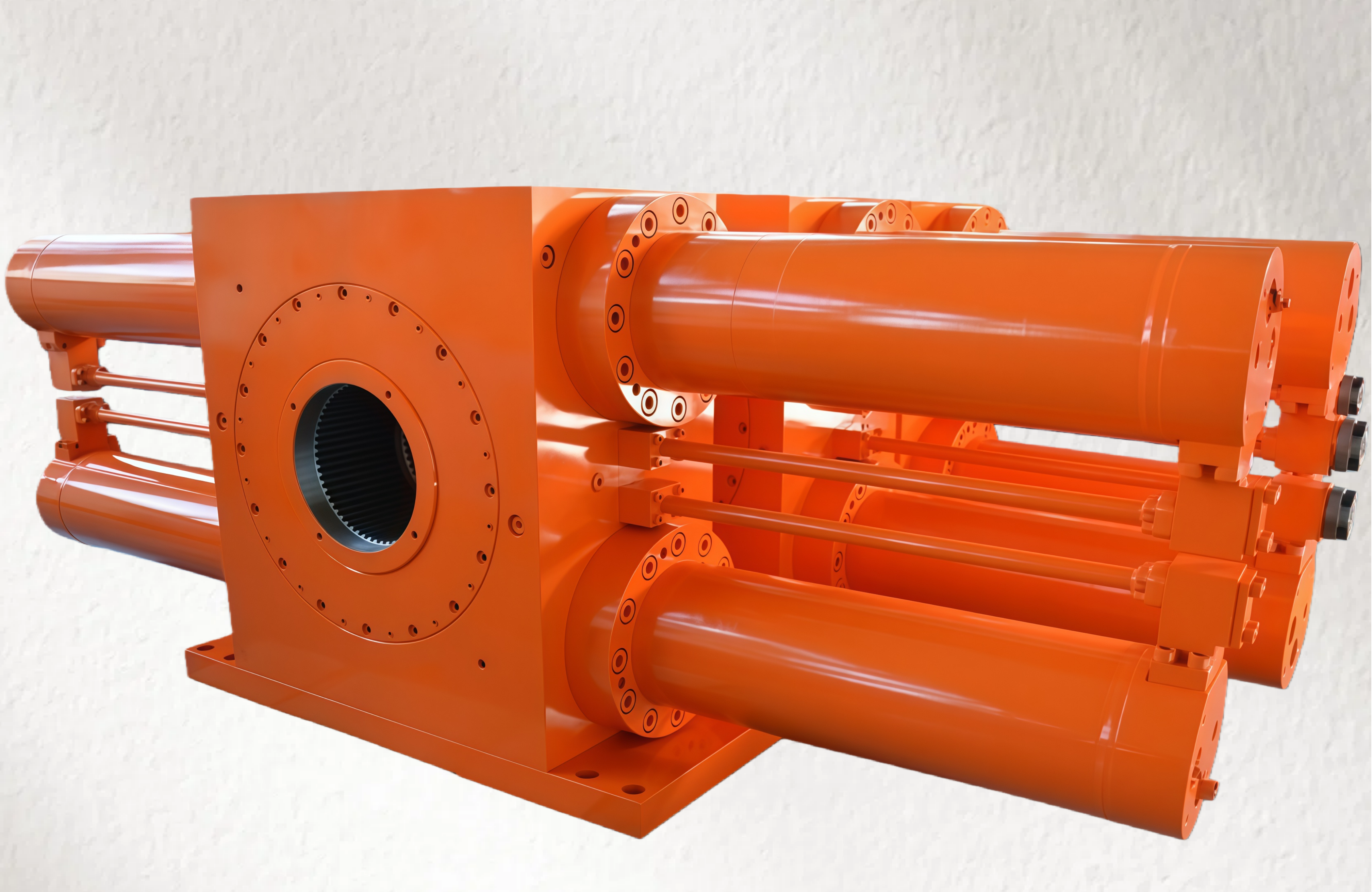
In the high-stakes environment of RH (Ruhrstahl-Heraeus) vacuum degassing, precise snorkel positioning is the gatekeeper of alloy purity and decarburization efficiency. As production requirements shift toward ultra-low carbon steel, achieving micron-level positioning under 1200°C thermal cycles has become mandatory.
This article explores how high-performance servo hydraulic cylinder systems outperform legacy actuators to secure operational excellence.
1. Physics-Based Stability: Conquering Vacuum and Thermal Drift
Unlike pneumatic or electromechanical systems, servo hydraulics leverage the inherent physics of incompressible fluids to ensure force stability.
Vacuum Integrity: The near-incompressibility of hydraulic fluid eliminates the pressure lag and compressibility errors common in pneumatic systems operating under deep vacuum.
Thermal Drift Compensation: Through a combination of thermally stable fluids and precision-ground metal-to-metal seals, these systems minimize outgassing and viscosity shifts.
Dynamic Friction Algorithms: Advanced controllers automatically adjust for seal behavior changes caused by thermal expansion, maintaining force stability within 0.5% throughout the full operating range.
2. Performance Benchmark: Why Servo Hydraulics Win
The gap in repeatability between actuator types is a primary factor in refractory wear and process consistency.
| Actuator Type | Repeatability (µm) | Thermal Drift Compensation | Vacuum Compatibility |
| Servo Hydraulic | < 5 | Active Real-Time | Excellent |
| Pneumatic | 20–50 | None | Poor |
| Electromechanical | 10–20 | Limited | Moderate |
Data based on industry performance benchmarks for combined thermal-vacuum conditions.
3. High-Fidelity Closed-Loop Control Architecture
To lock the cylinder within ±4.5 µm of the target position, our architecture employs a dual-feedback, high-speed loop:
Dual-Feedback Integration: We fuse signals from 22-bit sin/cos resolvers (for absolute rotary sensing) with 0.1 µm vacuum-rated optical linear encoders. This eliminates backlash and hysteresis found in indirect measurement systems.
10 kHz Motion Controller: The system processes feedback at a 10 kHz update rate, enabling sub-millisecond corrective responses to transient load shifts or thermal fluctuations.
Stiffness-Adaptation: The controller continuously adjusts servo valve gain parameters in real-time, compensating for reduced oil stiffness as the furnace environment changes.
4. Case Study: Tier-1 Steel Producer Retrofit
A global steel producer replaced its legacy pneumatic system with an integrated servo hydraulic solution.
Challenge: RMS positioning errors exceeding 100 µm led to frequent refractory misalignment and inconsistent degassing.
Results: Post-retrofit, the system achieved a sustained RMS accuracy of ±10.8 µm across 50 consecutive 1200°C cycles.
Efficiency Gains: Total cycle time was reduced by 12%, directly increasing throughput and extending refractory service life.
Conclusion
Upgrading to a servo hydraulic positioning system is more than a mechanical change; it is a strategic investment in metallurgical quality and production efficiency.
Are you looking to optimize your RH vacuum furnace performance?
[Contact our engineering team] to request our technical white paper or [Schedule a remote consultation] to discuss your specific site requirements.