
 EN
EN

In industrial automation, tasks requiring continuous force output exceeding 100 kN—such as stamping presses, injection molding, and heavy-duty material handling—demand more than what standard electric actuators can provide.
This article analyzes why servo hydraulic cylinders remain the industry gold standard for high-frequency, high-load environments.
1. Sustained Force: The Physics of Hydraulic Dominance
The core advantage of hydraulic systems lies in the fundamental fluid power principle: Force = Pressure × Area.
Unlike electric actuators, which often suffer from thermal derating under high torque density, servo hydraulic cylinders maintain rated force continuously.
Operating Pressure: Typical systems run at 1800–3000 psi (124–207 bar).
Real-World Example: A 5-inch bore unit at 2200 psi generates approximately 191 kN of force.
Reliability: Electric cylinders face significant thermal limits; many begin derating beyond 50 kN, requiring complex active cooling to prevent encoder drift or insulation failure.
2. Power Density: 2–3× Higher Performance per Footprint
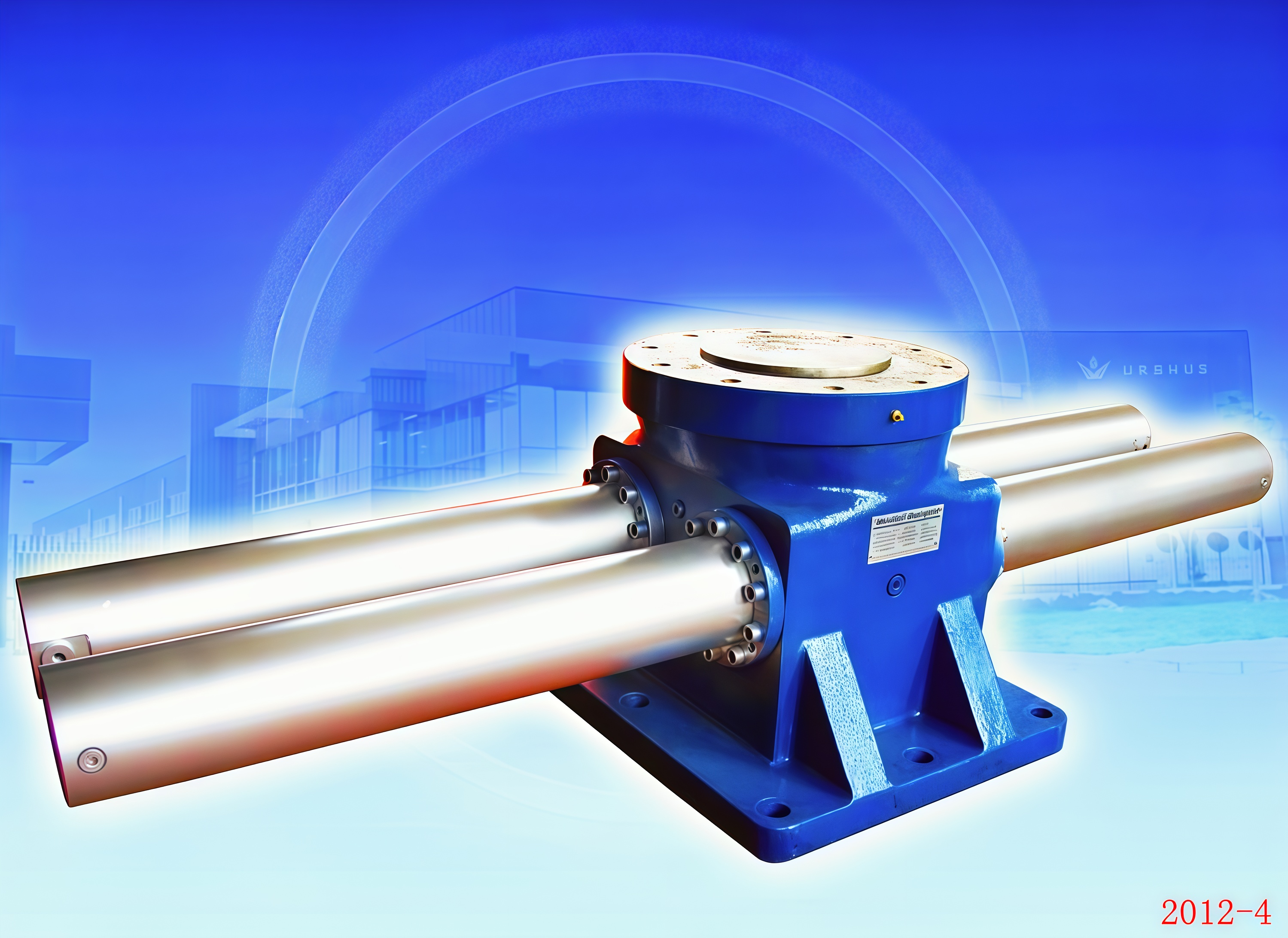
In space-constrained automation cells, power density (kW/m³) is a critical success factor.
| Feature | Servo Hydraulic | Electric Actuator |
| Power Density | High (200 kW/m³) | Moderate (70 kW/m³) |
| Response Speed | Excellent | Limited by Motor Inertia |
| Thermal Efficiency | Stable | Variable (Throttle-prone) |
Servo hydraulic systems transmit energy via high-pressure fluid, enabling smaller cylinder diameters to produce equivalent work. This allows for machinery downsizing without compromising speed or force.
3. High-Frequency Precision: Sub-50 ms Cycle Intervals
High-performance servo hydraulic cylinders enable sub-50 ms cycle intervals through a combination of low-inertia design and real-time closed-loop control.
Low Friction: Hydrostatic bearings reduce internal friction by up to 80%, dampening oscillation during directional changes.
Accuracy: Systems achieve ±0.01 mm repeatability even at 10+ Hz load reversals, thanks to high-resolution sensors (magnetostrictive or optical encoders) and rapid flow modulation via high-speed servo valves.
4. Operational Efficiency and Thermal Resilience
Contrary to the belief that "electric is always more efficient," electric systems suffer from current spikes and resistive heating during heavy-load acceleration, reducing real-world efficiency by 30–40%.
Hydraulic Intrinsic Cooling: Mineral oil acts as both a power medium and a coolant. This eliminates the need for expensive external cooling systems, ensuring stable performance even in ambient temperatures above 40°C.
Conclusion
For applications involving continuous load reversals, stamping, and forging, servo hydraulic cylinders provide a level of reliability and force density that electric alternatives simply cannot match. Investing in high-precision hydraulic actuation is a proven path to higher throughput and longer machinery lifespan.
Need technical guidance on your next automation project?
[Contact our engineering experts today] to discuss custom hydraulic specifications.