
 EN
EN
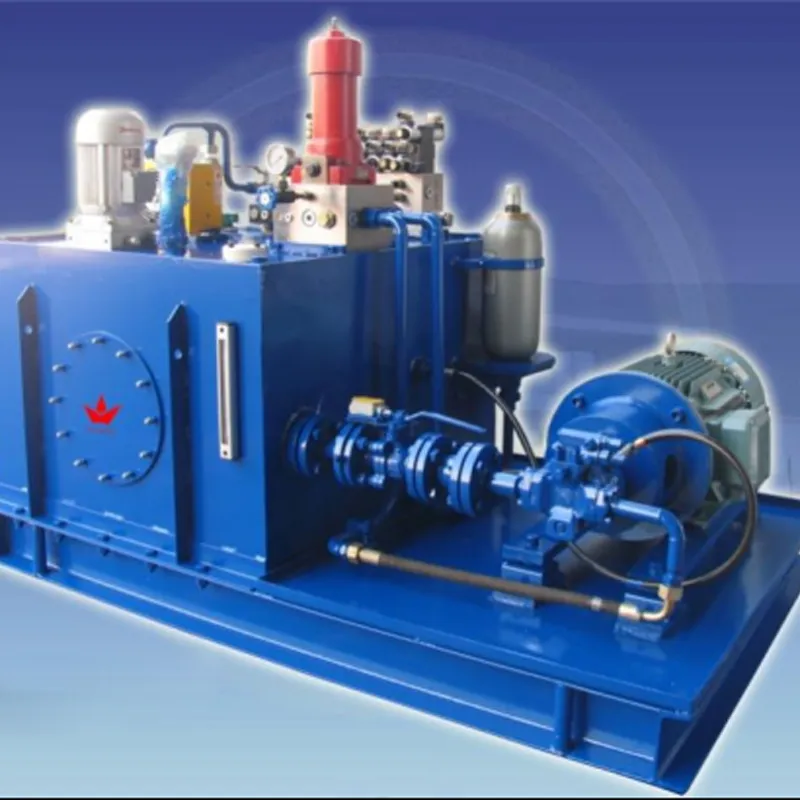
Legacy hydraulic press systems rely on complex combinations of pumps, sealing assemblies, filter units and control valves. After long-term high-cycle production, aging components frequently cause oil leakage, pressure instability and sudden machine shutdowns.
According to 2023 industrial machinery maintenance reports, reactive maintenance for outdated hydraulic presses costs up to three times more than proactive maintenance. Unplanned downtime directly drops Overall Equipment Effectiveness by 15% to 20%, while frequent part replacements and manual repairs continuously raise total operation costs.
Servo cylinder retrofitting completely solves most inherent failure points of traditional rams. With fewer moving parts, no continuous oil circulation and minimal seal wear, upgraded hydraulic presses greatly reduce maintenance frequency and downtime. Manufacturers can stabilize production output and cut annual operational expenses without losing original pressing force and structural stability.
Precision Deficiencies of Conventional Force Control Systems
High-end manufacturing including aerospace component forming and automotive panel stamping requires ultra-consistent pressing force repeatability. Traditional hydraulic rams struggle to maintain stable output due to oil viscosity changes, valve hysteresis and mechanical load lag.
Normal force deviation for standard hydraulic equipment ranges from 2% to 5%, resulting in defective products, inconsistent dimensions and repeated rework. Servo cylinder retrofits add real-time closed-loop force feedback, adjusting motor current thousands of times per second to achieve ultra-precise single-newton force control.
This accurate pressing mode supports customized pressure curves for different materials and shapes, effectively reducing scrap rates and improving finished product uniformity. It is an essential upgrade for precision manufacturing sectors with strict quality standards.
Core Performance Upgrade: Servo Cylinder Force Control Advantages
Traditional hydraulic rams adjust pressure through servo valves and pump flow regulation. Affected by thermal drift, fluid compressibility and mechanical wear, long-cycle operation always brings over 2% force fluctuation.
Servo cylinders directly convert servo motor torque into linear driving force, eliminating hydraulic delay and throttling energy loss. The built-in high-frequency controller analyzes position and force feedback at over 100Hz, achieving real-time error correction and sub-newton pressing accuracy.
This ultra-fine control is critical for thin aluminum stamping, composite material forming and micro-processing scenarios that require tolerance below 5 microns. Stable force output reduces material deformation, improves product yield and lowers raw material waste.
The following table clearly compares the core performance gap between traditional hydraulic systems and upgraded electro-hydraulic servo systems:
| Characteristic | Conventional Hydraulic Ram | Servo Retrofit Electro-Hydraulic System |
|---|---|---|
| Force Precision Variation | 2%–5% deviation | ≤0.5% full-scale deviation |
| Response Speed | Slow hydraulic lag | Instant real-time correction |
| Energy Efficiency | Continuous power consumption | 40%–70% energy saving |
| Precision Application Suitability | Only for rough forming | Ideal for micro-forming & high-precision stamping |
Synchronized Position & Force Control for Adaptive Ram Movement
Asymmetric processes such as deep drawing and progressive bending require consistent ram parallelism and adaptive pressure adjustment. Traditional hydraulic presses only support fixed-stroke mechanical compensation and cannot respond to real-time material changes.
Servo retrofitted systems realize full-stroke synchronous position-force control. Multiple actuators operate independently and coordinate dynamically through PID algorithms. The main PLC synchronizes position commands, while embedded multi-point force sensors feed back real-time material stress data.
The system automatically adjusts pressure and speed according to cavity changes and material tensile fluctuation, perfectly adapting to complex alloy forming. Instead of rigid fixed programs, the ram delivers flexible, smooth and adaptive motion for high-difficulty forming processes.
Reliable Mechanical and Control System Integration for Retrofits
Professional hydraulic ram retrofits require standardized mechanical optimization and safety upgrade solutions. Based on ASTM E8-24 material standards, engineering teams reinforce press frames with customized reinforcement plates to bear over 300kN servo dynamic load.
Precision adapter plates control assembly tolerance within 0.05mm, offsetting thermal expansion differences between different metal structures. Industry retrofit failure data shows 73% of renovation problems come from neglected interface reinforcement, proving structural integration is the core of stable long-term operation.
In terms of control migration, professional renovation retains original emergency stop circuits and redundant safety design, reducing rewiring costs by 45%. All upgraded systems comply with SIL-3 safety interlock standards and ISO 13849 equipment safety specifications, with dual verification of encoders and pressure sensors to ensure long-term stable precision.
Operational Benefits and Fast ROI of Hydraulic Press Modernization
Servo cylinder retrofits bring dual improvements in production efficiency and economic benefits. Different from traditional pumps running continuously, servo systems only consume power during movement and pressing, reducing energy consumption by 40%–70%.
Ultra-precise force control lowers scrap rates, optimized motion profiles shorten cycle time, and simplified mechanical structure drastically cuts maintenance frequency. Although equipment retrofits require initial capital investment, saved electricity fees, maintenance costs and improved production capacity help most factories achieve full ROI within 12–24 months.
It is currently the most cost-effective and highest-return modernization solution for aging hydraulic press fleets.
FAQ
Why is hydraulic press ram retrofitting necessary?
Retrofitting eliminates traditional hydraulic defects including oil leakage, low precision and high energy consumption. It reduces downtime, improves product quality and brings stable economic benefits.
What is the biggest advantage of servo cylinder upgrades?
Servo closed-loop control achieves sub-newton precision and real-time force adjustment, solving force deviation problems and supporting high-precision manufacturing requirements.
Will retrofits damage the original press structure?
Professional retrofits include frame reinforcement and high-precision adaptive installation to fully protect structural integrity and improve overall equipment load capacity.
How fast can factories get ROI after upgrading?
Most industrial manufacturers recover retrofit costs within 12 to 24 months through energy savings, reduced scrap and lower maintenance costs.
Does servo retrofitting require control system replacement?
It supports seamless migration based on original PLC circuits, complies with SIL-3 and ISO 13849 safety standards, and realizes intelligent iterative upgrading.
Table of Contents
- Precision Deficiencies of Conventional Force Control Systems
- Core Performance Upgrade: Servo Cylinder Force Control Advantages
- Synchronized Position & Force Control for Adaptive Ram Movement
- Reliable Mechanical and Control System Integration for Retrofits
- Operational Benefits and Fast ROI of Hydraulic Press Modernization
- FAQ