
 EN
EN
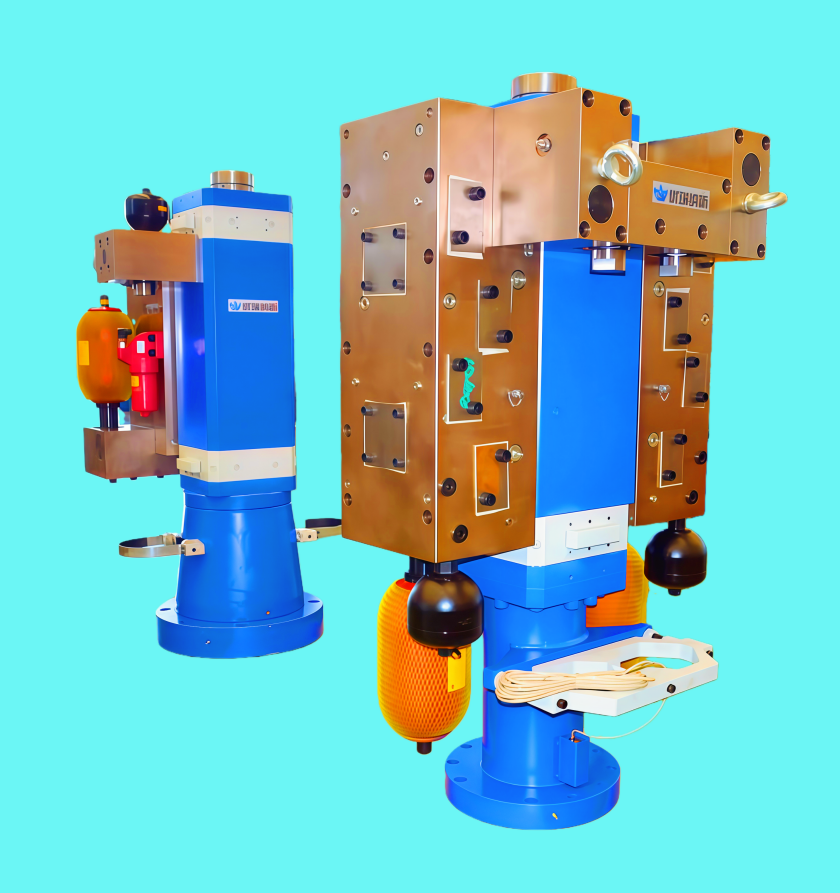
UY Series Hydraulic Press Cylinder Guide: Design, Material Science, and Sizing for Heavy Industry
Introduction: Engineering Reliability in Large-Bore Hydraulic Cylinders
In heavy industrial applications—forging, stamping, deep drawing, and scrap metal baling—the hydraulic press cylinder is the heart of the machine. Its reliability directly determines uptime, part quality, and operating costs.
The UY series heavy-duty hydraulic press cylinder achieves its dependability through meticulous structural engineering and material science. For bore diameters from φ450 mm to φ1000 mm, the design directly addresses the enormous forces and cyclic loading typical of industrial pressing. Operating at a standardized 3,000 psi (20.7 MPa), these cylinders deliver scalable force output from 335 to 1,656 metric tons, making them suitable for a wide range of high-force applications.
This guide covers the structural design, material selection, force sizing logic, and real-world performance of the UY Series hydraulic press cylinder—helping engineers and procurement specialists make informed decisions. [Internal Link: Explore our full UY Series cylinder range]
1. Structural Design: Load Path Optimization and Stress Distribution
Uniform load transfer is critical in large-bore cylinders. Finite element analysis (FEA) guides the contour of the cylinder head and cap to direct stress smoothly into the barrel—eliminating sharp geometric transitions that trigger localized stress spikes.
Key Design Features
| Feature | Benefit |
|---|---|
| FEA-optimized geometry | Reduces peak stress concentrations by up to 50% vs. conventional designs (2023 FEA Validation Study) |
| Thick-walled domed end cap | Evenly distributes radial and axial loads; significantly lowers fatigue risk at weld joints |
| Long, replaceable piston rod bearings | Maintains precise alignment under high side-loading; reduces parasitic forces on seals and bore surfaces |
| Minimum 3:1 safety factor | Accommodates dynamic pressure surges without plastic deformation |
Together, these features extend fatigue life and enhance operational safety during high-cycle, high-force duty cycles.
2. High-Strength Material Selection for Sustained 3,000 psi Operation
Sustaining 3,000 psi (20.7 MPa) continuously demands materials engineered for strength, toughness, and dimensional stability.
Material Specifications
| Component | Material | Key Properties |
|---|---|---|
| Barrel | Micro-alloyed steel (forged) | Minimum yield strength: 690 MPa |
| Piston rod | Induction-hardened, chrome-plated steel | Surface hardness: ≥60 HRC; ductile core |
| Piston & gland | Ductile iron or high-strength alloy steel (e.g., 42CrMo4 per ISO 2022) | Tensile strength: 1,080 MPa; proven cyclic deformation resistance |
| Seals | Hydrogenated nitrile (HNBR) or polyurethane | Full-system pressure rating; compatible with standard hydraulic fluids |
Design philosophy: All primary load-bearing components are designed with a minimum 3:1 safety factor against yield—ensuring the cylinder accommodates dynamic pressure surges without plastic deformation, preserving long-term leak-free performance.
3. Force Performance and Sizing Logic
Bore Diameter–Force Relationship at 3,000 psi
The UY Series generates linear force via the fundamental fluid power equation:
Force = Pressure × Piston Area
Operating at a standardized 3,000 psi (20.7 MPa), output scales quadratically with bore diameter—making the φ450–1000 mm range uniquely suited for applications requiring scalable tonnage.
| Bore Diameter (mm) | Piston Area (cm²) | Theoretical Force (kN) | Theoretical Force (metric tons) |
|---|---|---|---|
| φ450 | 1,590 | 3,290 | 335 |
| φ600 | 2,827 | 5,850 | 596 |
| φ800 | 5,027 | 10,400 | 1,060 |
| φ1000 | 7,854 | 16,240 | 1,656 |
Values assume 3,000 psi (20.68 MPa) hydraulic pressure; actual force is reduced by friction and system losses.
This predictable bore-to-force relationship enables engineers to right-size cylinders—optimizing energy efficiency, minimizing footprint, and avoiding costly oversizing or performance-limiting undersizing.
Integrated Load Calculation: Accounting for Real-World Losses
Relying solely on theoretical force risks premature failure or inconsistent performance. Real-world losses are substantial:
| Loss Factor | Typical Impact |
|---|---|
| Seal friction | Consumes 5–10% of available force |
| Internal leakage | Degrades efficiency by 3–5% over time |
| Pressure drop (valves/fittings) | Subtracts 50–200 psi |
| Dynamic events (die impact, rapid acceleration) | Transient force spikes up to 3× static load |
Example: A φ450 mm cylinder delivering 3,290 kN theoretically may sustain only ~2,800 kN in practice.
Integrated sizing formula:
Required Cylinder Force = (Maximum Static Load + Dynamic Increment) × Safety Factor / Efficiency Factor
Where:
Safety factor: Typically 1.5 to 2.0
Efficiency factor: 0.85–0.90 (consolidates friction, leakage, and pressure-loss effects)
This approach guarantees the UY Series operates reliably within its continuous-duty rating—preserving seal integrity, maintaining positional accuracy, and reducing total cost of ownership.
4. Real-World Deployment: Precision and Reliability in Action
Precision Positioning and Repeatable Force Control
In heavy-duty press systems, precision positioning and consistent force delivery directly influence part quality, scrap rates, and cycle repeatability.
The UY Series achieves this through:
Rigid construction – Minimizes deflection under load
Low-friction seals – Reduces stick-slip behavior for smooth motion
Integration-ready interfaces – Pairs with high-response proportional valves and real-time feedback (e.g., built-in linear transducers)
Closed-loop adjustments – Maintains accuracy over millions of cycles
Result: Predictable cycle times, tighter process windows, and measurable gains in production efficiency—even at full 3,000 psi.
Case Study: UY Series in Scrap Metal Baling Presses
In scrap metal baling presses—where irregular feedstock induces severe side-loading and shock—UY Series cylinders demonstrate exceptional field resilience.
The challenge:
Irregular scrap causes unpredictable side-loads
Severe mechanical shock from compaction cycles
High cycle counts lead to seal wear and downtime
The solution: Retrofit with UY Series cylinders featuring heavy-gauge steel housings, oversized rod bearings, and hardened wear surfaces.
Results from a major North American recycling facility:
30% reduction in unplanned downtime (primarily due to extended seal service life)
15% throughput increase (faster, more stable cycling)
Simplified maintenance access reduced repair times
These gains translated directly into higher processing volumes and lower total cost of ownership. [Internal Link: See more case studies for UY Series applications]
5. Application Spotlight: Where UY Series Cylinders Excel
| Industry | Application | Why UY Series |
|---|---|---|
| Automotive | Stamping, deep drawing | Precision positioning; Class-A surface finishes |
| Metal forming | Forging, extrusion | High-force capacity; fatigue resistance |
| Recycling | Scrap baling, compaction | Side-load tolerance; shock resistance |
| Aerospace | Composite molding | Repeatable force control; tight tolerances |
| Heavy equipment | Press fitting, assembly | Scalable force output; reliability |
6. Maintenance and Service Life Optimization
To maximize the service life of your UY Series hydraulic press cylinder:
| Practice | Frequency | Benefit |
|---|---|---|
| Seal inspection | Every 1,000 operating hours | Prevents leaks; extends seal life |
| Rod surface check | Weekly visual | Catches scoring or plating damage early |
| Oil analysis | Quarterly | Detects contamination; monitors wear |
| Mounting bolt torque verification | Annually | Maintains alignment; prevents loosening |
| Piston rod bearing replacement | As needed (wear measurement) | Maintains precision; reduces side-load damage |
Proactive maintenance, combined with the UY Series‘ robust design, typically achieves service life exceeding 10 years in most industrial applications.
FAQ
What makes the UY series hydraulic press cylinder suitable for heavy industrial applications?
The UY series leverages rigorous structural engineering, high-strength materials, and optimized load distribution designs to withstand high cyclic forces and deliver dependable performance across various industrial applications.
What materials are used to manufacture the UY Series hydraulic press cylinder?
The cylinders are made from micro-alloyed steel, induction-hardened chrome-plated steel, and ductile iron or high-strength alloy steels, ensuring durability, toughness, and resistance to cyclic deformation.
How is stress minimized in large-bore hydraulic press cylinders?
Stress minimization is achieved using finite element analysis (FEA) to optimize cylinder geometry, a thick-walled domed end cap, and precise alignment under high loads, reducing fatigue and localized stress spikes.
What is the force output range for the UY series bore diameter of φ450–1000 mm?
Depending on the bore size, force output ranges from 3,290 kN to 16,240 kN at 3,000 psi, making it scalable for various high-precision and high-force operations.
What maintenance benefits does the UY series offer?
The UY Series features durable components and simplified maintenance access, reducing unplanned downtime and extending service life even under harsh operating conditions.
How does the UY Series handle side-loading in scrap baling applications?
Oversized rod bearings, heavy-gauge housings, and hardened wear surfaces allow the UY Series to withstand severe side-loading and shock without performance degradation.
Conclusion: Choose the UY Series for Reliable, Scalable Hydraulic Power
The UY Series hydraulic press cylinder delivers proven performance in the most demanding industrial applications. With FEA-optimized design, high-strength materials, predictable force scaling (335–1,656 metric tons), and field-validated reliability, it offers engineers and plant managers a dependable solution for high-force, high-cycle operations.
Whether you are specifying a new press system or upgrading existing equipment, the UY Series provides the structural integrity, precision, and longevity required for today‘s competitive manufacturing environment.
Ready to size a UY Series cylinder for your application? [Contact our engineering team] for technical specifications, sizing assistance, and a free consultation.
[Internal Link: Browse the complete UY Series hydraulic press cylinder lineup]
Table of Contents
- Introduction: Engineering Reliability in Large-Bore Hydraulic Cylinders
- 1. Structural Design: Load Path Optimization and Stress Distribution
- 2. High-Strength Material Selection for Sustained 3,000 psi Operation
- 3. Force Performance and Sizing Logic
- 4. Real-World Deployment: Precision and Reliability in Action
- 5. Application Spotlight: Where UY Series Cylinders Excel
- 6. Maintenance and Service Life Optimization
- FAQ
- Conclusion: Choose the UY Series for Reliable, Scalable Hydraulic Power