
 EN
EN
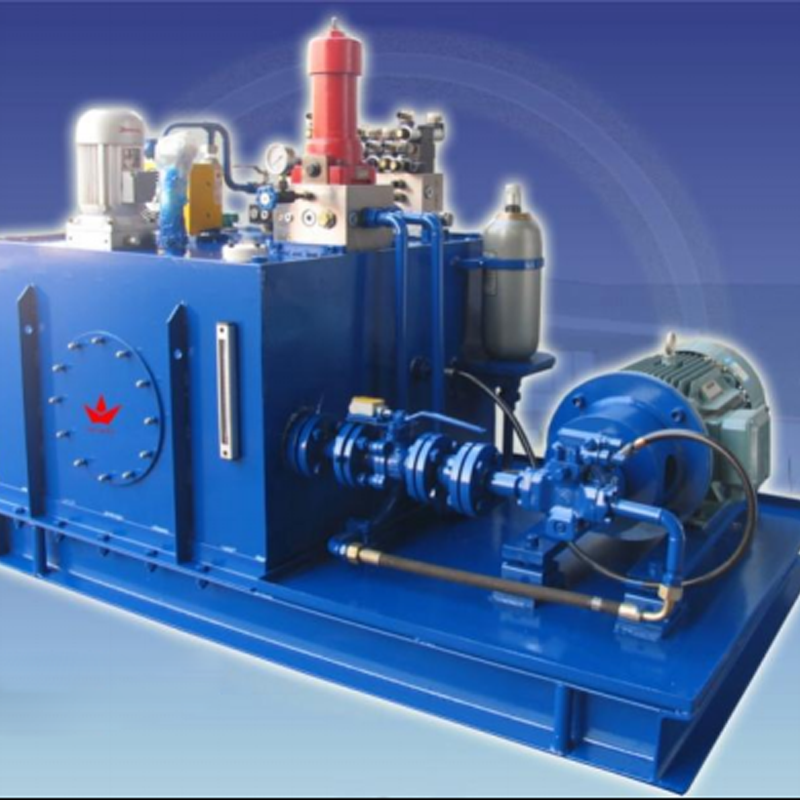
Double Acting Hydraulic Press Guide: Bidirectional Force, Speed Control, and Efficiency
Introduction: Why Double Acting Hydraulic Presses Dominate Heavy Forming
In high-volume manufacturing—especially automotive stamping and deep drawing—the double acting hydraulic press is the machine of choice. Unlike single-acting presses that rely on gravity or springs for retraction, a double acting design delivers powered motion in both directions: extension and retraction. This capability enables precise cycle control, faster throughput, and superior part quality.
This guide explains the working principles, speed control strategies, and efficiency architectures of modern double acting hydraulic presses, with real-world performance data from 800-ton automotive applications. Whether you’re specifying a new press or upgrading an existing line, these insights will help you optimize your forming operations. [Internal Link: Explore our double acting hydraulic press models]
1. Pascal’s Law in Action: Balanced Pressure for Extend and Retract
The foundation of bidirectional force generation is Pascal’s law—pressure in a confined fluid is transmitted equally in all directions. A double acting hydraulic press uses two dedicated ports to supply hydraulic oil to opposite sides of the piston:
Cap end pressure – Drives the ram outward (extension), generating force equal to system pressure multiplied by the full piston area.
Rod end pressure – Powers retraction, where effective area is reduced by the rod’s cross-section but still delivers robust, controllable force.
This balanced, bidirectional actuation eliminates dependence on gravity or springs, enabling precise, repeatable stroke control. In deep drawing applications—such as automotive panel forming—the punch must advance and retract under power to maintain blankholder control, prevent wrinkling, and ensure consistent material flow. That dual-action capability enhances cycle repeatability and reduces mechanical wear over time.
2. Real-World Performance: 800-Ton Automotive Deep Drawing Press
An 800-ton double acting hydraulic press is standard in high-volume automotive stamping, where it forms steel or aluminum body panels via deep drawing. During the forming phase, the press sustains a holding pressure of 12 MPa—sufficient to suppress material instability while allowing controlled flow into complex die cavities.
Typical Cycle Profile
Rapid approach – Up to 250 mm/s for blankholder positioning
Controlled pressing – As low as 5 mm/s upon tool contact for precise deformation
Holding/dwell – Maintains pressure (12 MPa) to ensure material flow
Powered retraction – Fast return for part ejection
This speed modulation is essential for achieving Class-A surface finishes and tight dimensional tolerances. Industry data shows such systems reduce cycle time by up to 30% versus single-acting alternatives, primarily due to powered retraction and synchronized motion control (Automotive Press Performance Report 2023). Precise retraction also supports automated part ejection and accommodates varying material thicknesses without external counterbalance mechanisms—improving flexibility and throughput.
3. Speed Control Strategy: Fast Approach to Slow Pressing
Optimizing the transition from fast approach to slow pressing is critical for part quality, tool life, and energy efficiency. The ram must traverse the open gap quickly—minimizing non-productive time—then decelerate smoothly before tool engagement to avoid shock loading.
Valve Sequencing Fundamentals (Traditional Approach)
Traditional speed control relies on a 4/3 closed-center directional valve paired with adjustable flow controls:
| Phase | Valve State | Flow Path | Speed |
|---|---|---|---|
| Fast approach | Fully open | Pump flow to cap end; return line unrestricted | ~250 mm/s |
| Transition | Limit switch triggers metering position | Flow throttled through adjustable orifice | Deceleration begins |
| Slow pressing | Metering position | Restricted flow to cap end | 5–10 mm/s |
| Dwell | Closed-center | Pressure maintained | 0 mm/s (force holding) |
While mechanically simple and cost-effective, this discrete shift can cause pressure spikes and minor tool bounce, potentially accelerating die wear.
Modern Evolution: Proportional Flow Valves with Linear Feedback
Proportional flow valves—equipped with spool-position feedback via linear variable differential transformers (LVDTs)—enable infinitely variable flow control, replacing abrupt valve shifts with smooth, programmable deceleration ramps.
Key advantages:
Smooth transition – Eliminates shock loads, protects tooling
Dynamic adjustment – Integrated pressure transducers provide real-time load feedback; controller adjusts flow to maintain target speed under varying resistance
Transition time – Under 100 ms, dramatically reducing mechanical shock and improving positional repeatability
Energy savings – Field data shows up to 30% energy reduction compared to fixed-orifice throttling (2024 retrofit benchmark)
4. Dual-Pressure, Dual-Flow Architecture for Cycle Efficiency
A key enabler of cycle efficiency in modern double acting hydraulic presses is the use of two independent pump circuits:
| Circuit | Flow Rate | Pressure | Function |
|---|---|---|---|
| High-flow / Low-pressure | ~100 L/min | ~5 MPa | Rapid approach and fast retraction |
| Low-flow / High-pressure | ~20 L/min | ~30 MPa | Controlled pressing and holding |
This decoupling allows each circuit to operate at its optimal point—avoiding the inefficiency of a single pump forced to meet both peak flow and peak pressure demands simultaneously.
Benefits:
Shorter cycle time – High-flow circuit fills cylinder rapidly
Precise force control – High-pressure circuit delivers only the flow needed for deformation
Reduced motor sizing – Smaller pumps, less heat generation
Lower energy costs – Significant savings in high-duty-cycle applications like automotive deep drawing
5. Critical Components Enabling Seamless Speed Transition
Achieving a stable, shock-free transition from 250 mm/s rapid advance to 5 mm/s controlled pressing requires coordinated action among several core components:
Proportional flow valves – Modulate incoming oil volume based on position and pressure feedback
Variable-displacement pumps – Dynamically adjust output to match demand
Closed-center directional valve – Manages the shift between high-flow and high-pressure circuits
Electronic pressure-compensated manifold – Eliminates mechanical lag
Position sensors (LVDT) – Provide real-time ram position data
Pressure transducers – Feed load information to the controller
The resulting motion profile minimizes idle time, protects tooling from impact loads, and sustains consistent force application—critical for deep-drawing operations where dimensional accuracy hinges on a stable, low-speed deformation phase.
6. Application Spotlight: Deep Drawing with Double Acting Presses
Deep drawing is one of the most demanding applications for a double acting hydraulic press. The process requires:
Blankholder force – Controlled via the outer ram to prevent wrinkling
Punch force – Delivered by the inner ram to draw material into the die
Powered retraction – Essential for stripping the formed part from the punch
A double acting press excels here because both the blankholder and punch can be independently controlled—with separate pressure and flow settings. This flexibility allows rapid setup changes for different part geometries and material grades, making it indispensable in automotive and appliance manufacturing. [Internal Link: See our deep drawing press solutions]
7. Maintenance and Reliability Considerations
To maximize the lifespan of your double acting hydraulic press, follow these best practices:
Regular oil filtration – Maintain cleanliness to ISO 4406 code 18/16/13 or better
Seal inspection – Check rod and piston seals for leaks every 500 operating hours
Valve calibration – Verify proportional valve spool position and LVDT feedback annually
Pressure relief valve testing – Ensure safety settings are correct
Cooler maintenance – Keep oil temperature below 55°C to prevent viscosity breakdown
Proactive maintenance reduces unplanned downtime and extends component life—critical for high-production environments.
FAQ
Q1: What is the main advantage of a double acting hydraulic press?
A double acting hydraulic press generates bidirectional force, allowing powered motion in both extension and retraction for precise and repeatable control during operations.
Q2: How does Pascal’s law apply to double acting hydraulic presses?
Pascal’s law ensures that pressure in a confined fluid is equally distributed in all directions, enabling balanced pressure transmission for both extend and retract strokes.
Q3: What are proportional flow valves, and how do they improve speed transition?
Proportional flow valves ensure smooth and programmable deceleration during speed transitions, replacing abrupt valve shifts and reducing mechanical shock while improving energy efficiency.
Q4: Why is dual-pressure, dual-flow architecture important for efficiency?
This architecture optimizes hydraulic press performance by decoupling high-flow, low-pressure operations from low-flow, high-pressure modes, reducing energy consumption and cycle time.
Q5: How do double acting hydraulic presses enhance deep drawing applications?
These presses improve deep drawing by enabling powered retraction, reducing cycle times, providing precise control, and ensuring consistent material flow to achieve Class-A finishes.
Conclusion: Invest in a Double Acting Hydraulic Press for Superior Forming Performance
A double acting hydraulic press delivers bidirectional force, precise speed control, and energy-efficient operation—making it the backbone of modern automotive, appliance, and metal forming industries. With technologies like proportional valves and dual-pressure architectures, today’s presses offer unmatched flexibility and reliability.
Ready to upgrade your forming line? [Contact our engineering team] for custom press sizing, technical specifications, and a free performance assessment.
[Internal Link: Browse our complete hydraulic press product range]
Table of Contents
- Introduction: Why Double Acting Hydraulic Presses Dominate Heavy Forming
- 1. Pascal’s Law in Action: Balanced Pressure for Extend and Retract
- 2. Real-World Performance: 800-Ton Automotive Deep Drawing Press
- 3. Speed Control Strategy: Fast Approach to Slow Pressing
- 4. Dual-Pressure, Dual-Flow Architecture for Cycle Efficiency
- 5. Critical Components Enabling Seamless Speed Transition
- 6. Application Spotlight: Deep Drawing with Double Acting Presses
- 7. Maintenance and Reliability Considerations
- FAQ
- Conclusion: Invest in a Double Acting Hydraulic Press for Superior Forming Performance