
 EN
EN
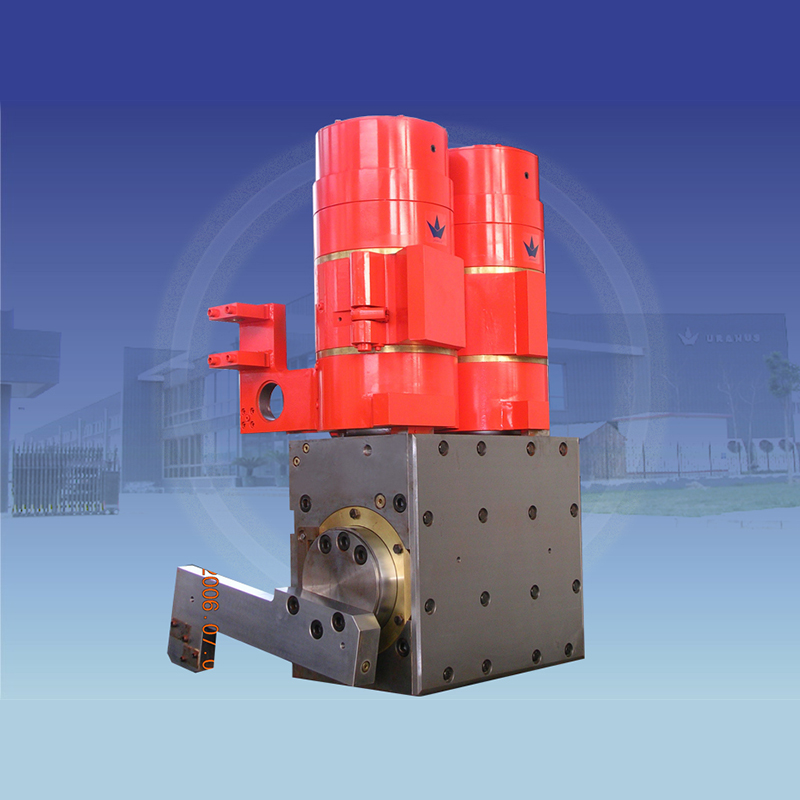
The challenge presented by hydraulic cylinder technology in the field of engineering steel mill rolling mills involves the generation of very high loads (greater than 2500kN) in limited mill space. Conventional design of hydraulic cylinders for this application fails because of large bore design hydraulics which results in inefficient space design causing:
Interference with adjacent machinery
Increased structural load on the mill frame
Faster deterioration of seals from side loads
Thermal buildup of the hydraulic fluid
According to a 2022 study on metallurgy, of the unplanned downtime on hot-rolling mills, 67% was attributable to the lack of capacity of cylinders to fill the design space. These challenges increase in intensity and frequency during a continuous rolling operation, due to the interaction of thermal expansion with other forms of misalignment and increased mechanical stress.
The Importance of High Pressure Hydraulics to Achieve Higher Force Density
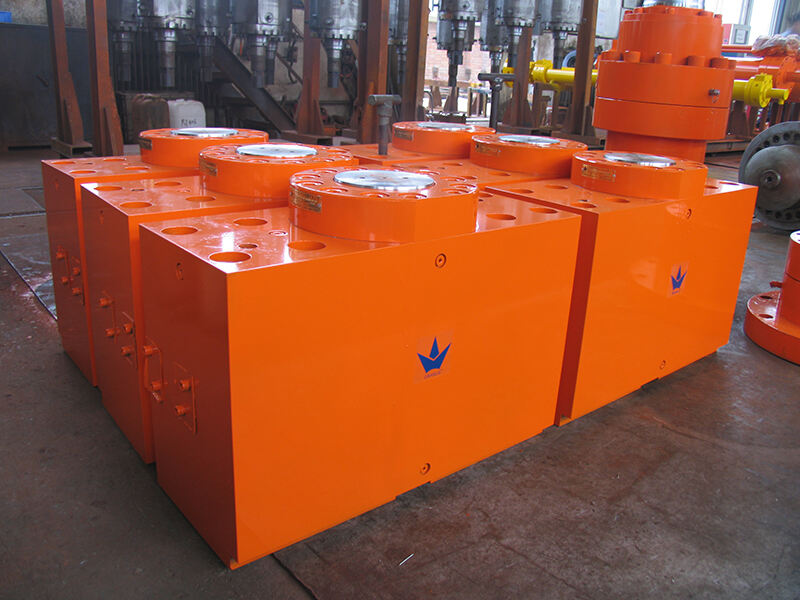
High pressure hydraulics can resolve the challenge of the space-force paradox with Pascal's Law: Force = Pressure x Area. Operating within the range of 250 - 350 bar (which is double the operating pressure within most hydraulic systems) allows the hydraulics to achieve the same force output with cylinders that take up 30 - 40 % less space. The dramatic change in force density offers three key benefits detailed below:
Reduced bore diameter: Achieving the same level of force with a smaller cross sectional area allows for a smaller cylinder diameter
Lower fluid volume: Higher operating pressures cause flow rates to be reduced, decreasing the size of the reservoir and piping
Enhanced stiffness: Fluid compressibility decreases significantly above 200 bar improving control of position and reducing response time
Modern sealing systems, such as thermoplastic elastomers and reinforced polymer composites, maintain integrity under extreme pressure and thermal cycling. Field data from integrated steel systems have shown an average of an 18% increase in mill uptime from spatial driven failures being eliminated while maintaining a rolling tolerance of ± 0.05 mm.
Designing Compact Cylinders with High Pressure Hydraulics
Using 200 - 300 bar allows for a significant reduction to bore diameter and cylinder envelope with minimal impact to the output force. This is a particularly significant advantage when designing steel mills that have already been constrained due to space. Traditional hydraulic systems constrained to 150 bar allows for a bore diameter up to 40% larger when operating pressure is increased. This allows for greater integration of rolling equipment in closely spaced configurations while maintaining adequate clamping force. 300 bar pressure systems utilize finite element analysis (FEA) to safely minimize wall thickness and weight. Precise honing of the bore to ±0.02 mm is employed to minimize extrusion failures under highly pressurized conditions.
Material and Sealing Innovations for Thermal, Mechanical, and Chemical Robustness
Advanced alloys containing 30CrMoV9, for instance, achieve a yield strength of 950 MPa, and therefore replace the traditional steels used for mechanical stresses of 300 bars or higher. Multi-stage seals have been developed to cope with the 24× pressure differential from standard operations. The first seal, a thermoplastic polyurethane (TPU) ring, retains 90% of the pressure. The secondary seal, a nitrile butadiene rubber (NBR) seal, accommodates dynamic loads and prevents seal rupture. Numerous surface treatments, like laser-clad coatings, are resistant to the abrasive scales found in descaling zones. Chromium-plated rods are resistant to diluted and concentrated coolant and descaling solutions. All these innovations enable a service life of greater than 10,000 hours and support thermal cycling of 50°C to 300°C.
System Integration of High Pressure Hydraulics in Mill Environments
Pump, Valve, and Hose Selection for Stable 250+ Bar Operation Amid Thermal Cycling
The integration of high pressure hydraulics in a mill environment places significant demands on the selection of each component to absorb the effects of thermal cycling, contamination, and shock loads. Pumps must deliver flow at 250+ bar with the ability to resist thermal fatigue at ambient temperatures of 50°C (122°F) and higher. Valves must be controlled for flow with rapid actuation and a high resistance to abrasive scale with good seal integrity. Fabrication of hoses that connect the hydraulics requires layered construction and specially engineered elastomers that sustain extreme temperature shifts, continuous high pressure, and rapid high pressure load shifts.
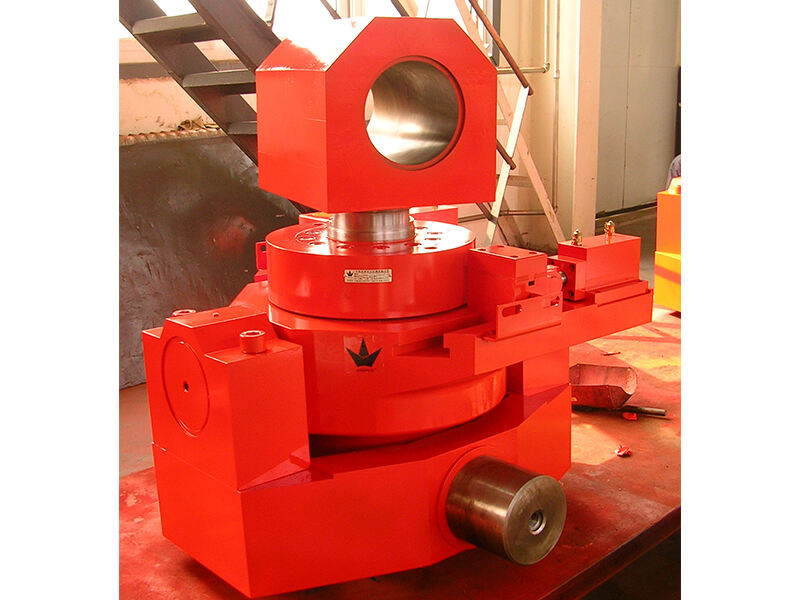
As reported in Industrial Hydraulic Quarterly (2023), a well-optimized selection of hydraulic components for high pressure mill applications reduced the incidence of unscheduled operational downtimes by 42%, confirming that the integrity and design of the entire system are just as important as the design of the individual cylinders.
Field Validation: Benefits of High Pressure Hydraulics on Reliability and Uptime
High pressure hydraulics systems in steel mill rolling operations have been validated to create substantial reliability and uptime improvements. Approximately 15% – 25% unplanned downtime per year attributed to cylinder failure is now nonexistent due to extreme rolling loading of the systems. These results are a refinement of materials and sealing innovations that have been validated through accelerated life testing in accordance with ISO 10763 (2023). Directly correlating increased uptime to extended maintenance windows of 8,000 – 10,000 operational hours is a key advantage of this system. 98.5% uptime is documented when mills implement high pressure hydraulics systems developed in accordance with ISO 10100, which also is a key factor in achieving high pressure hydraulic continuous rolling. This is proof that adapted high pressure solutions are proven to the extreme thermal cycling, contamination, and shock loading that are the hallmark of mill operations.
FAQ
What is the issue that steel mill rolling mills are dealing with?
In steel mill rolling applications the balance of sustaining extreme force in a very small physical footprint without causing operational conflicts and mechanical stresses is the main issue.
How do high pressure hydraulics solve the space - force paradox?
By utilizing pressures of 250 – 350 bar, the need for large bore diameters and overall systems is compact, allowing for a higher force density thereby smaller cylinder designs.
What is the 300 bar solution in regards to materials and Innovations?
In regards to high pressure and extreme condition, 30CrMoV9, multi-stage sealing systems, laser-clad surface treatments, and chromium plating are excellent solutions.
How does system integration improve reliability in steelworks?
The correct use of pumps, valves, and hoses, designed for operation at over 250+ bar, allows an optimized system that improves reliability while undergoing high levels of thermal and mechanical stress, and improves maintenance downtime.
What are the maintenance advantages of high-pressure hydraulic systems?
High-pressure hydraulic systems achieve extended maintenance intervals of about 8,000 to 10,000 hours, and reduce unplanned downtime while increasing production uptime.