
 EN
EN
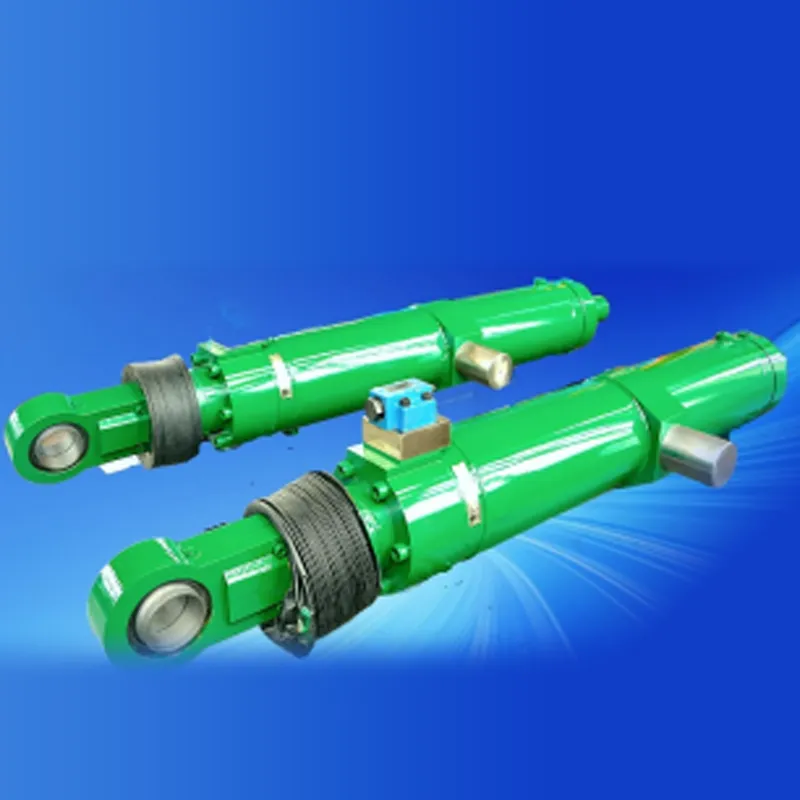
Pure mechanical hydraulic systems rely on manual adjustment and fixed valve logic, making them prone to lag, inaccuracy and unstable output under changing loads. Modern custom hydraulic systems solve this pain point through closed-loop electro-hydraulic integration, combining electronic intelligent sensing with powerful hydraulic execution.
High-precision sensors continuously monitor real-time pressure, flow rate and actuator position, feeding operating data to embedded controllers. The system automatically compares actual operating values with preset targets and dynamically adjusts valve opening or pump speed. This eliminates mechanical hysteresis and load-induced errors.
With optimized PID algorithm control, industrial hydraulic presses maintain ram velocity within 0.5% target tolerance, even under 100-bar pressure fluctuations. Compared with traditional open-loop systems that depend on operator experience, electro-hydraulic closed-loop control achieves repeatable micron-level accuracy, improves energy utilization and extends component service life.
Real-World Performance Gain: 35% Faster Actuator Response for Mobile Cranes
Speed, smoothness and safety are critical for mobile hydraulic equipment such as cranes, excavators and aerial work platforms. Fixed-parameter hydraulic controllers often suffer from slow response and excessive overshoot under variable load conditions.
By adopting real-time adaptive PID tuning, electro-hydraulic integrated systems dynamically adjust Kp, Ki and Kd parameters according to real-time load weight and boom angle. In field tests, the boom cylinder full-speed response time was shortened from 1.2 seconds to 0.8 seconds, achieving a 35% improvement in response efficiency.
This adaptive tuning reduces jitter and settling time during delicate lifting operations, greatly improving operating accuracy and construction safety. The same optimization logic applies to all mobile custom hydraulic systems, upgrading traditional sluggish hydraulic response into agile, precise and stable motion control.
Digital Twin Co-Simulation Cuts Custom R&D Prototyping Cycle by 40%
Custom hydraulic system development faces long cycles and high trial-and-error costs due to diverse OEM working conditions and customized parameters. Digital twin virtual simulation technology completely changes the traditional R&D model.
Engineers build 1:1 virtual replicas of hydraulic systems to simulate fluid dynamics, temperature changes and structural stress under various working conditions. Combined with real sensor data, co-simulation verifies design rationality before physical prototyping. This effectively eliminates repeated prototype modifications, shortening the R&D iteration cycle by 40%.
For customized projects with unique pressure, flow and environmental requirements, digital twin verification accelerates design validation, reduces R&D costs, and helps enterprises launch differentiated hydraulic solutions faster.
Modular Architecture Supports Scalable, OEM-Exclusive Hydraulic Customization
Fully customized hydraulic systems from scratch involve complex verification, long lead times and poor universality. Modern electro-hydraulic integration adopts a standardized modular design strategy.
Pre-verified general modules including pumps, proportional valves, accumulators and controllers can be flexibly combined and upgraded according to OEM demands. Manufacturers can reuse mature core modules while replacing targeted actuators or protective components for high-tonnage, high-vibration or marine anti-corrosion scenarios.
Modular design shortens design-to-production cycle, simplifies later maintenance and equipment iteration, and realizes low-cost, high-reliability personalized customization without sacrificing system compatibility and stability.
Smart Sensor + Controller + Proportional Valve Trio: Adaptive Control Reduces 60% Energy Waste
The core of high-performance electro-hydraulic integration lies in the organic coordination of three core components: smart sensors, embedded controllers and proportional valves.
Smart sensors collect full-state data of pressure, temperature and flow in real time. The controller analyzes operating status through intelligent algorithms and precisely adjusts the output of proportional valves. This closed-loop adaptive control automatically compensates load changes and operating interference during equipment operation.
Verified by 2024 PLOS ONE academic research, intelligent electro-hydraulic systems reduce energy consumption by 60% under variable load conditions compared with traditional constant-flow hydraulic circuits. It realizes accurate ±0.1mm positioning for industrial manipulators and stable dynamic balance for mobile engineering machinery.
Balance Standardization and Customization to Maximize Project ROI
Blind full-customization leads to excessive verification costs and unstable compatibility; pure standardization cannot meet differentiated working condition demands. Advanced electro-hydraulic design balances standardization and customization perfectly.
Standardized core components ensure 85% universal performance and greatly shorten the verification cycle by 40%. On this basis, engineers carry out targeted customized optimization: applying anti-corrosion components for marine hydraulic systems, vibration-resistant structures for mining equipment, and high-frequency response modules for precision presses.
This hierarchical design guarantees both universal reliability and industry-specific adaptability, becoming the most cost-effective engineering solution for current custom hydraulic system projects.
FAQ
What is closed-loop electro-hydraulic integration?
It is an intelligent control mechanism that uses sensors and controllers to monitor and adjust hydraulic operation in real time, eliminating mechanical errors and achieving high-precision, repeatable hydraulic output.
How does PID tuning improve hydraulic performance?
Adaptive PID parameters adjust dynamically with load and angle changes, speeding up system response, reducing overshoot and improving the smoothness and accuracy of hydraulic actuation.
What are the benefits of digital twin simulation?
Digital twin virtual testing reduces physical prototype iterations, cutting R&D cycles by 40% and lowering customization costs for special hydraulic systems.
Why is modular design important for custom hydraulics?
Modular architecture reuses mature and verified components, supporting scalable customization, shortening delivery cycles and simplifying after-sales maintenance.
How much energy can smart electro-hydraulic systems save?
According to authoritative PLOS ONE test data, intelligent closed-loop hydraulic systems reduce variable-load energy consumption by up to 60% compared with traditional hydraulic systems.
Table of Contents
- Real-World Performance Gain: 35% Faster Actuator Response for Mobile Cranes
- Digital Twin Co-Simulation Cuts Custom R&D Prototyping Cycle by 40%
- Modular Architecture Supports Scalable, OEM-Exclusive Hydraulic Customization
- Smart Sensor + Controller + Proportional Valve Trio: Adaptive Control Reduces 60% Energy Waste
- Balance Standardization and Customization to Maximize Project ROI
- FAQ