
 EN
EN
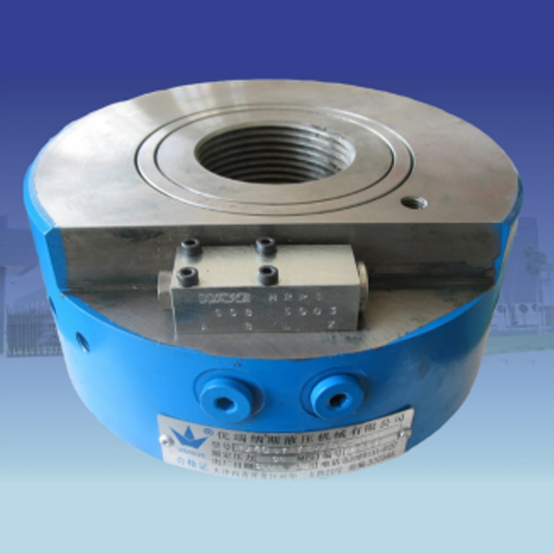
Overcoming Fastening Challenges in Heavy-Duty Foundations
Securing massive structural components in heavy-duty foundations and wind turbine installations presents unique engineering hurdles that conventional tightening methods struggle to resolve. When dealing with large-scale anchor bolts operating under severe dynamic loads and cyclic vibrations, traditional torque wrenches frequently fall short. Field experience shows that rotational tightening relies heavily on friction coefficients, meaning that a significant portion of the applied energy is wasted overcoming thread and contact friction rather than stretching the bolt shank. This friction variability often results in uneven bolt preloads, joint relaxation, and premature structural failure in high-stress environments. Shifting toward a dedicated hydraulic nut eliminates these uncertainties by introducing direct axial tension, ensuring absolute joint integrity across critical industrial infrastructure.
The Engineering Mechanics of Hydraulic Nut Technology
The core advantage of utilizing a hydraulic nut lies in its direct approach to generating precise and repeatable bolt preloads without rotational drag. When high-pressure oil is pumped into the internal pressure chamber of the device, the integrated piston moves axially upward, stretching the bolt directly to its target elongation. Once the precise design load is achieved, the mechanical locking ring is spun down to lock the stretched position in place, allowing the hydraulic pressure to be safely released. This direct-pull mechanism completely bypasses the unpredictable variables of friction coefficient changes, making it exceptionally reliable for high-temperature, high-vibration, or confined assembly spaces where manual torque application is virtually impossible or dangerously inaccurate.
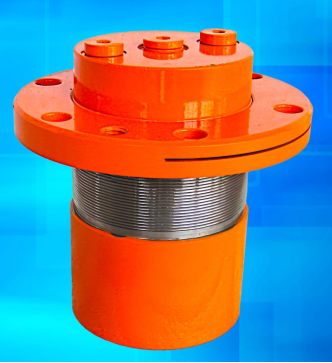
Comparative Performance Analysis and Technical Metrics
Plant engineers and maintenance supervisors frequently evaluate fastening methods based on installation efficiency, safety, and long-term joint retention. Traditional torque-controlled tightening is notoriously prone to error, whereas advanced hydraulic tensioning systems deliver consistent axial force every single time. The performance comparison tables below outline the mechanical differences and highlight specific dimensional profiles across standard heavy-duty applications.
Performance Parameter |
Traditional Torque Tightening |
Advanced Hydraulic Nut Solution |
Preload Accuracy |
Low error margin due to friction |
High-precision direct axial tension |
Friction Dependency |
High reliance on thread & collar friction |
Zero rotational friction on bolt shank |
Operator Safety |
High physical strain and risk of tool slip |
Controlled hydraulic pressure with mechanical lock |
Maintenance Efficiency |
Slow sequential tightening with high wear |
Rapid simultaneous or single-unit pressurization |
Model Designation |
Internal Thread / Bore |
Cylinder Dimensions (OD x ID x Stroke) |
Working Pressure |
M0308T205/130 |
M90 Metric |
Main: 205mm x 130mm x 10mm |
25.0 MPa (Test: 42.0 MPa) |
UM1410 Custom |
Bore: $\phi 385$ |
Custom Annular Configuration |
Standard Industrial |
UM1707 M160 |
M160 Heavy Metric |
OD: 230mm x ID: 185mm x 6mm |
60.0 MPa (Test: 70.0 MPa) |
Engineering Specifications and Real-World Product Profiles
Selecting the correct fastening hardware requires careful coordination between thread geometry, operating pressures, and spatial constraints on site. Industrial environments ranging from metallurgical rolling mills to offshore wind turbine nacelles demand robust alloy steels capable of withstanding extreme test pressures without fluid bypass. For instance, high-pressure models operating at sixty megapascals require specialized seals and precision-machined annular chambers to handle demanding duty cycles. Engineers must carefully match the hydraulic pump output with the designated working pressure of the fastener to guarantee absolute safety and long-term durability during continuous high-vibration operations.
Strategic Selection Guidelines and Global Manufacturing Excellence
Choosing the ideal hydraulic nut for complex infrastructure projects involves evaluating multiple operational factors, including bolt specification, required target preload, environmental exposure, and physical installation space. Verifying that the thread pitch matches metric or imperial standards is only the first step; operators must also account for ambient temperature extremes and potential corrosive exposure before finalizing their order. UranusTJ stands at the forefront of this specialized industry, leveraging decades of advanced hydraulic engineering expertise to design and manufacture thousands of metric, imperial, and custom non-standard solutions operating reliably worldwide. Through rigorous quality control and responsive global supply chain networks, UranusTJ continues to empower industrial leaders with world-class fastening reliability.